There are days when a town belongs to no one. In early summer 1941, Cēsis found itself in exactly such a void — between two armies, between two occupations, with a brief, strange moment of freedom in between.
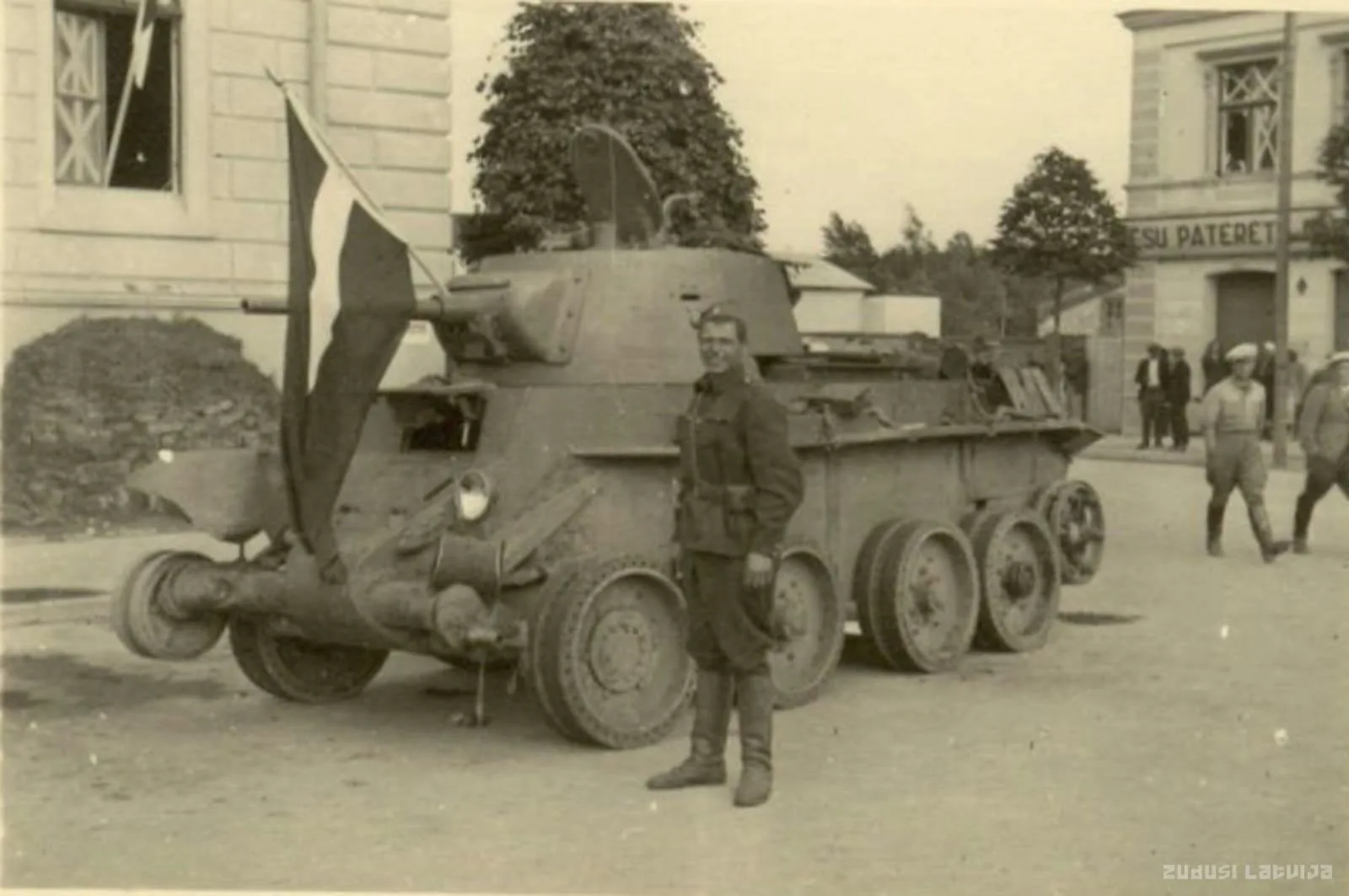
Since early June there had been no regular army in the town. Instead came the Chekists, militiamen and Party officials fleeing from Kurzeme, while a stream of refugees flowed through Cēsis from Rīga. From local activists and stray soldiers an operational group was formed — some 80 men with two anti-tank guns and two lorries — roaming the country roads in search of "bandits" and deserters. On 27 June the evacuation of Soviet institutions began. In the town centre stood an abandoned BT-7 light tank — a pre-war Soviet machine built for rapid advance along Europe's highways, able even to shed its tracks. Now it stood like a monument to a power that had fled; soon someone attached a Latvian flag to it.
In this power vacuum, Latvians began to organise themselves. In the former staff building of the 3rd Latgale Division on Dārza Street 5, soldiers and Home Guardsmen gathered and formed the Cēsis district self-defence group; by various accounts, some 450 men had withdrawn into the surrounding forests. Colonel Mārtiņš Kaspersons and Kārlis Liepiņš were appointed leaders of the town.
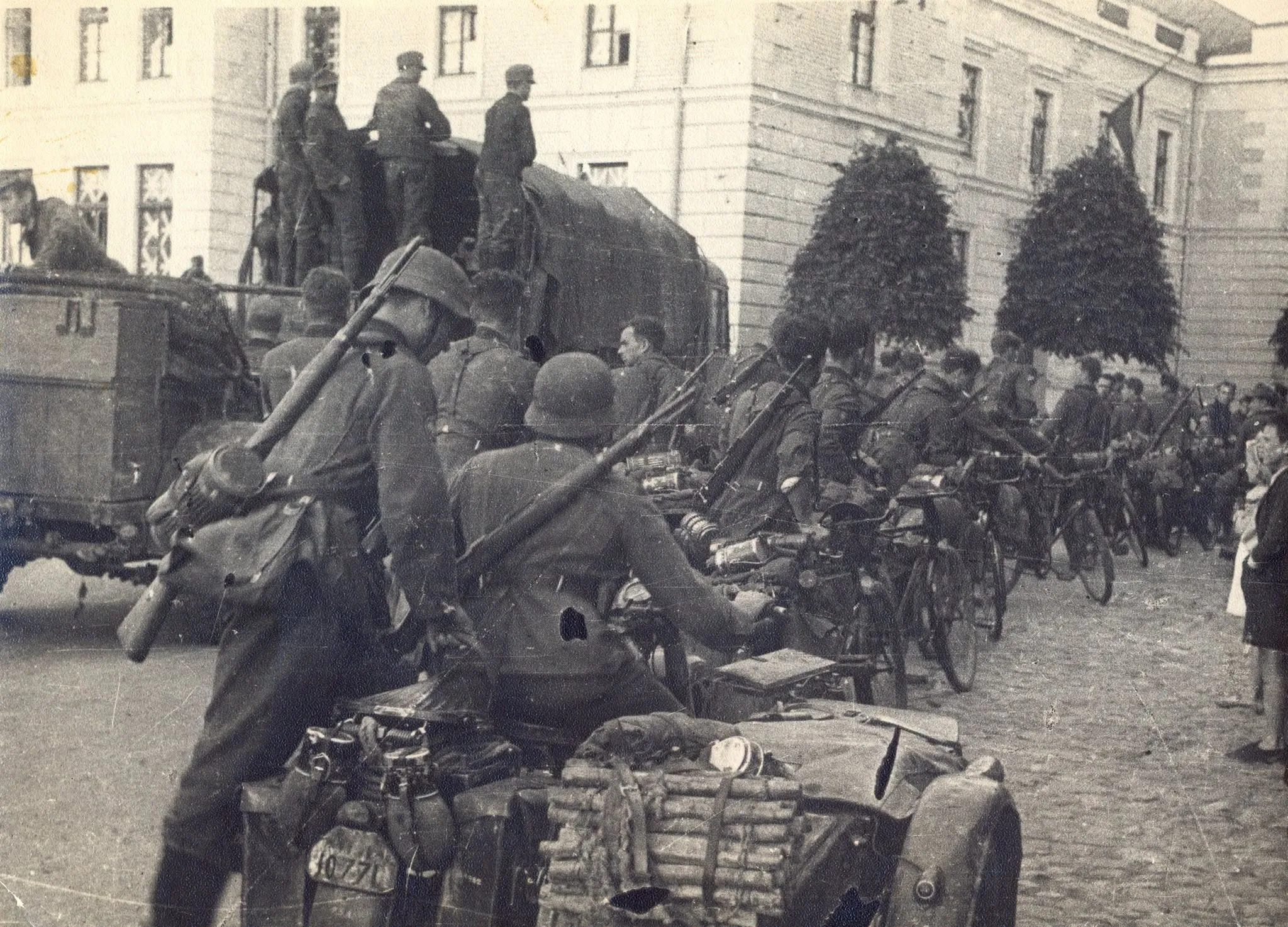
Then came 5 July. The cyclists of the German 61st Division rode into Cēsis and pressed on towards Valmiera, halting at the bank of the Rauna. In those days the German 1st Army Corps was taking Cēsis, Valmiera, Smiltene and Strenči across Vidzeme. German staff and rear units settled into the Cēsis barracks and at Prof. Būmanis (now Piebalgas) Street 3. Hugo Drava-Blumbergs soon became head of the town.
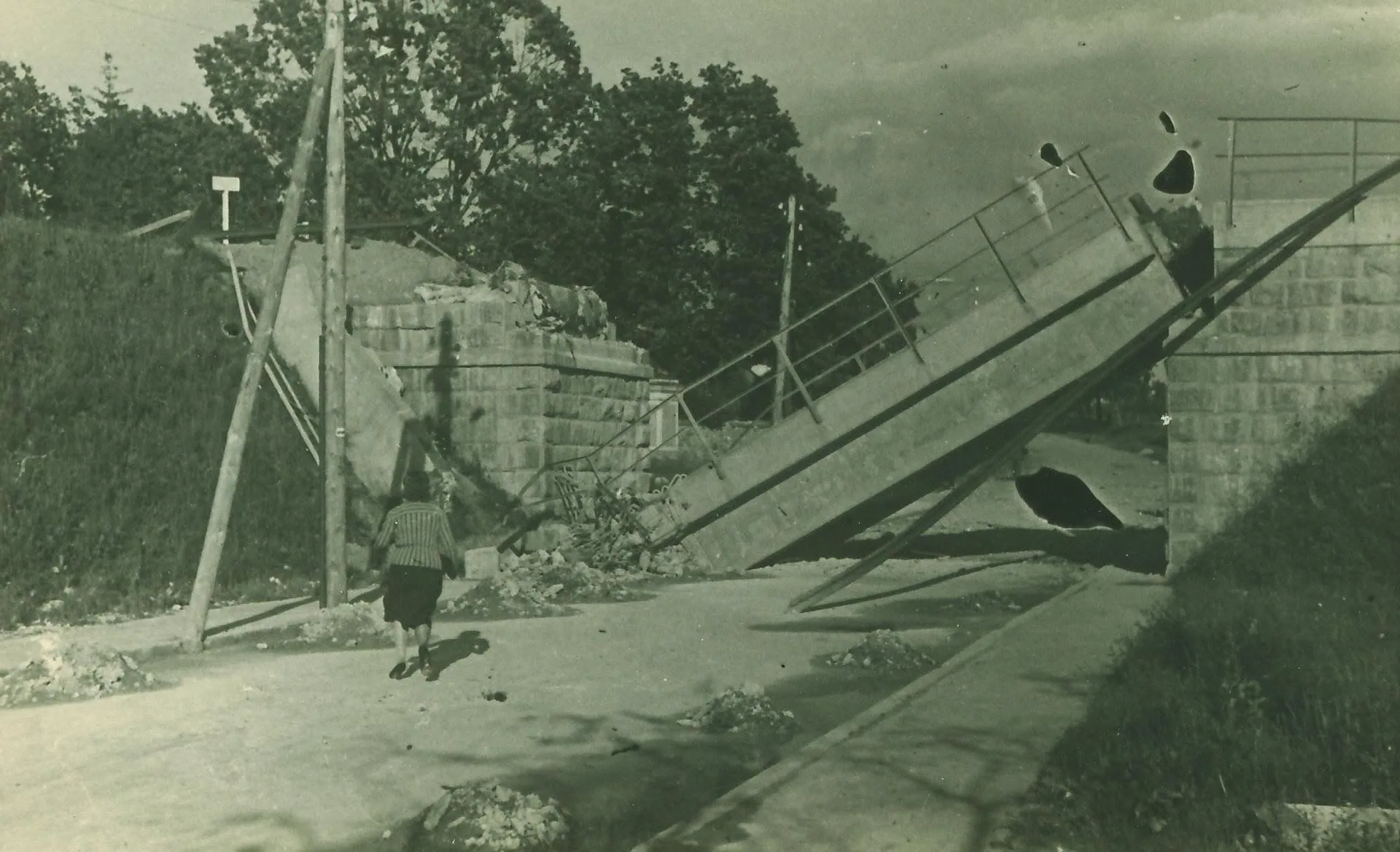
The incoming troops did not find an untouched town. The day before, on 4 July, a Soviet armoured train had arrived at Cēsis station with demolition crews — they blew up the railway viaduct over Piebalgas Street and damaged the station, then rolled on, destroying the Rauna bridge and Lode station along the way. The collapsed viaduct lay there like the first monument to the change of occupiers.
Many people in Cēsis greeted the German arrival as liberation from Soviet terror and the year's deportations — only on 14 June, 523 people had been deported from the district. Yet the liberation was deceptive: one occupation simply replaced another. Just a few weeks later, on the night of 10 August, the Jews of Cēsis and its district — around 200 people — were arrested and murdered in the forest by Lake Niniers. The arrival of the German army opened the gates to a new time of trials.