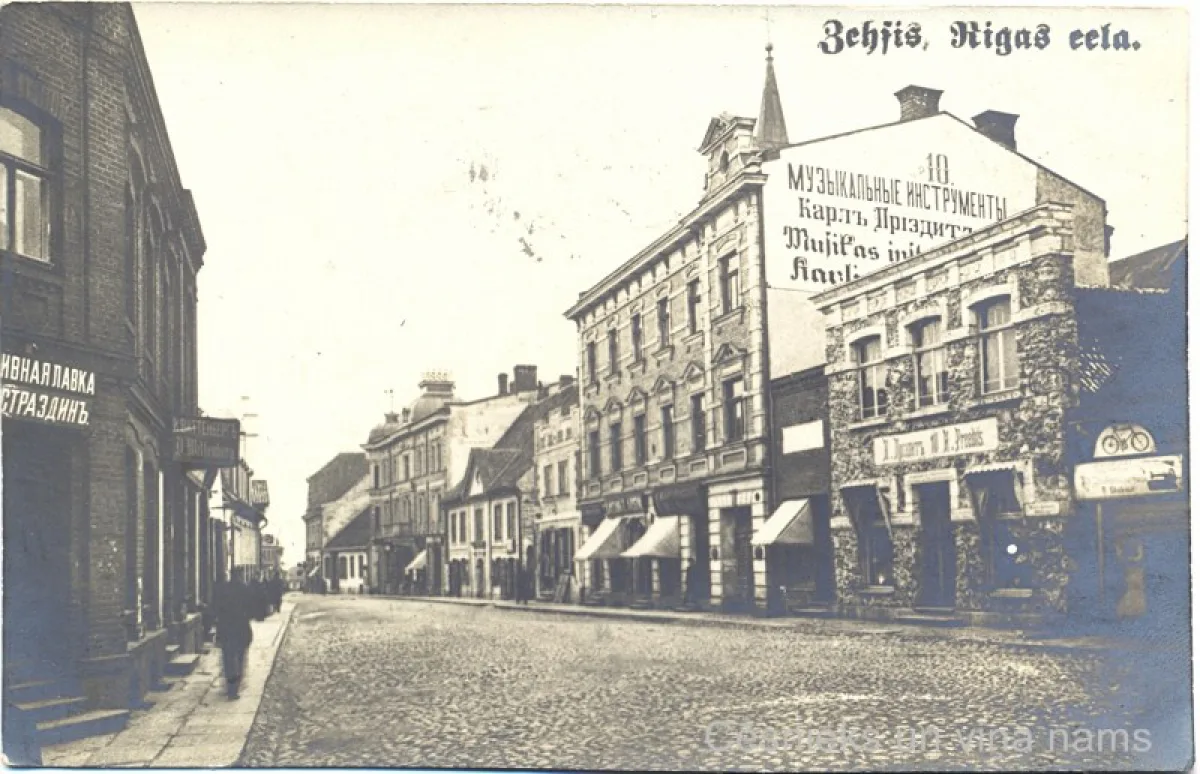
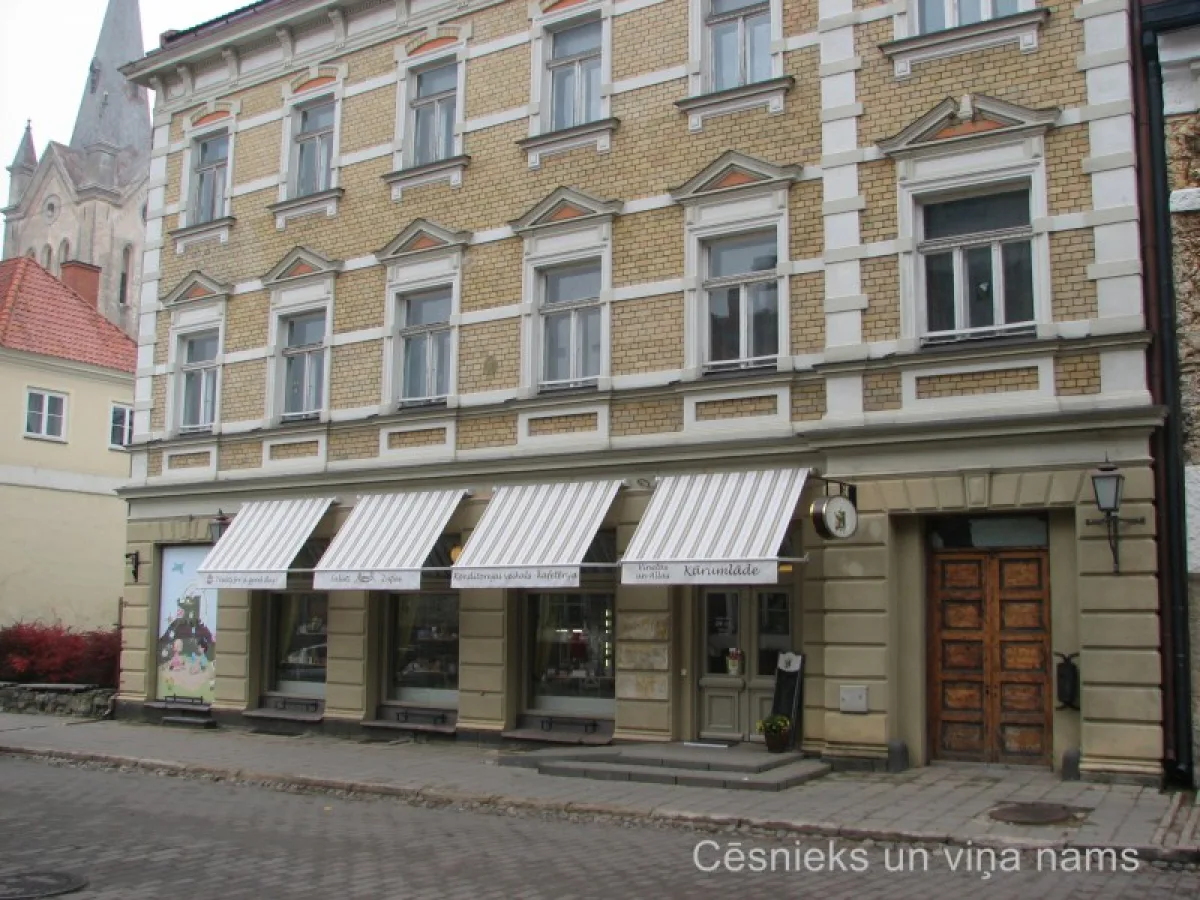
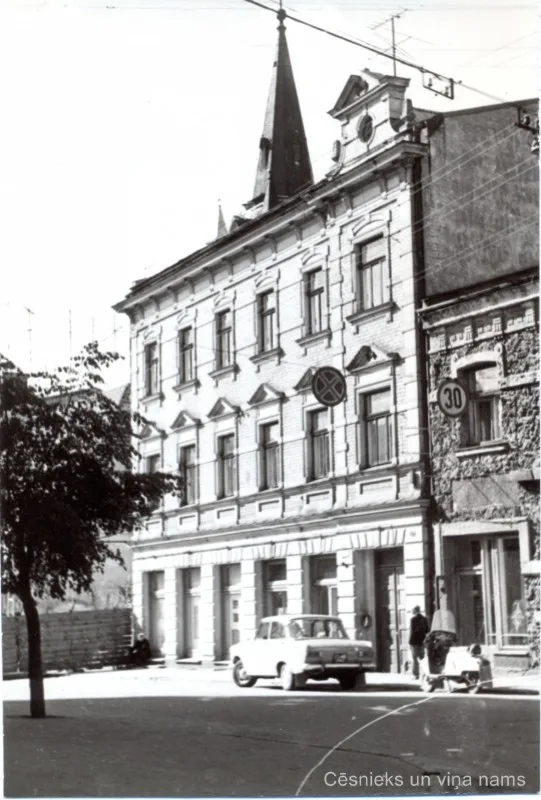
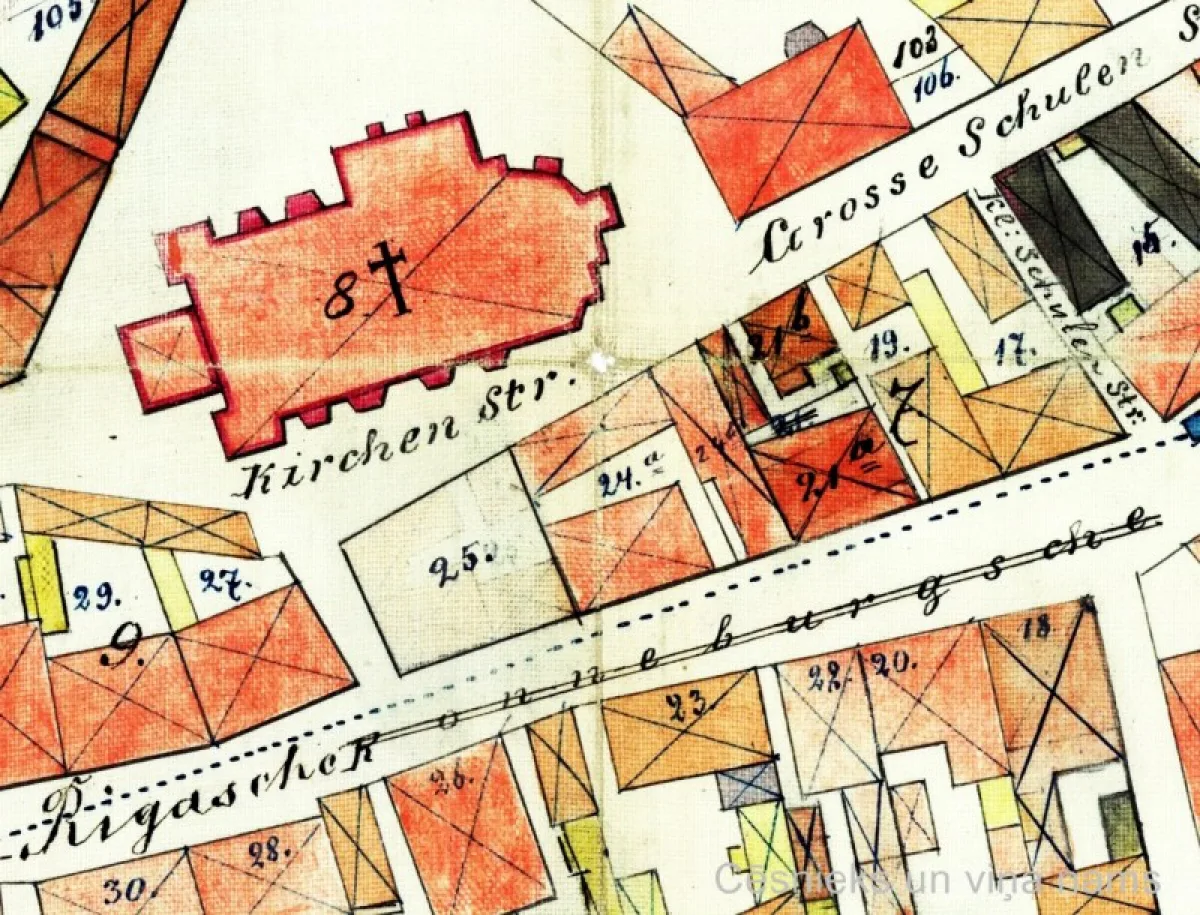
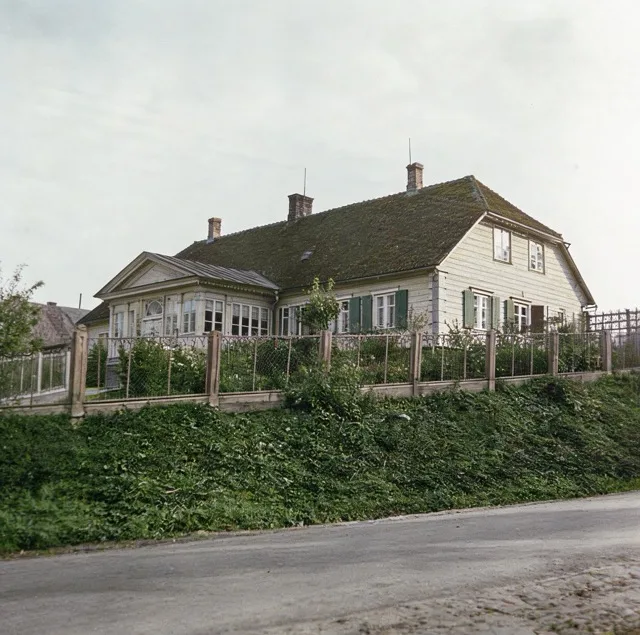
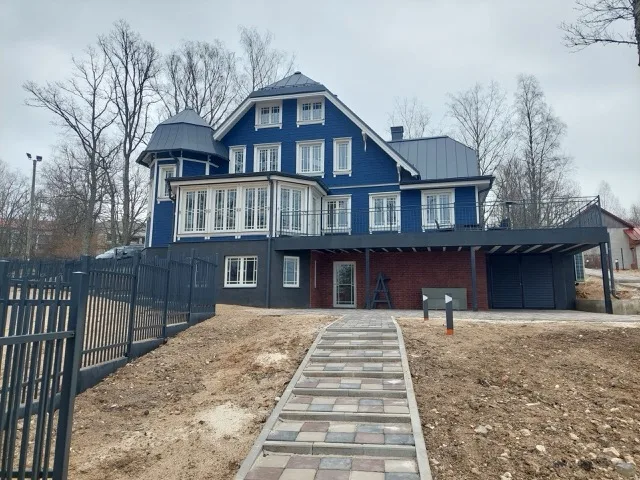
The tall building at Rīgas Street 12 stands as a quiet witness to history right in the heart of Cēsis, holding stories that begin in the late 18th century. The plot first appears in 1787 (survey year) and in the 1815 Cēsis city plan (map publication year) with land registry number 21. At that time, the property with a wooden residential house belonged to homeowner and master shoemaker Fridrihs Vīners, who got it as a dowry when he married Anna Marija Vogts, born Hercogs. Anna's first husband – Pēteris Heinrihs Vogts – had bought this property on May 31, 1777, from councilor Valters Ernsts Hassing and built a wooden residential house on it.
After several ownership changes, on October 26, 1818, the plot was purchased for 750 silver rubles by Cēsis homeowner and master tailor Johans Kristians Frišs. The three-story brick building we see today was built in the late 19th century under contractor Jānis Meņģeļis, replacing the original wooden building. It was built as property for someone named Strikers. In the 1920s-30s, the house belonged to Vilhelms Trampedahs, who lived at Rīgas Street 30 himself but rented this building to various businesses. During this time, all sorts of businesses operated here: A. Velmers' tin workshop, P. Bielovs' clothing and accessories store, A. Derums and P. Bielovs' shoe store, M. Tankels' textile shop. 1932. In 1932, A. Bensons' bakery and confectionery opened, but the next year it became M. Vogts' candy shop from the famous Riga factory L. V. Gēgingers (L. W. Goegginger). In the fourth apartment of the house, insurance agent A. Bremsens received visitors, representing the joint stock company "Rīgas Unions."
One of the most respected Cēsis residents of that time also lived in the building – 80-year-old Kārlis Martinsons, who suddenly passed away on November 5, 1936. Since no one claimed his inheritance, his refined belongings – a small concert grand piano from Beker company, oak furniture, and a sealskin coat – were sold at public auction three months later.
After World War II, just three weeks after the German army left, a bookstore opened at this address on October 19, 1944. Initially it mainly sold office supplies to students, since publishers hadn't resumed operations yet. Ink was brought from Riga in large containers and poured into smaller bottles on site. The bookstore operated here until 1958, then the building housed a Consumer Services Complex photo studio for a long time, and in the early 1990s – J. Šmits' photo studio.
As time passed, the building's functions changed, but it regained special liveliness in 2010 when the sweet aroma returned – café and confectionery shop "Vinetas un Allas kārumlāde" opened. It caught attention with its bright shop windows and awnings, reminiscent of the time when similar decorations adorned the house in the early 20th century.
Special attention should be paid to the gatehouse or entrance hall on the right side of the building. From a modest goods unloading area, it became a creative and attractive designer clothing salon. 90. In the 90s it served as J. Šmits' document photo archive, later as one of the most popular video rental shops in the city at the time, run by someone named Oļegs. In later years, this space was used as a Lutheran congregation warehouse. Until finally in 2016, entrepreneur Inese Ose, receiving a 3,000 euro grant from Cēsis Municipality's "Dari Cēsīm" competition, transformed this place into children's designer clothing salon "Tili," preserving its historical charm and giving it new life.
The materials used for the description are:
Dace Cepurīte, Mg. hist., Research “A Cēsis Native and His House”
Collections of the Cesis Museum and Cesis central library.
Pērle Blanka and Inese Osīte's presentation "Horse entrances that are becoming public spaces in Cēsis"