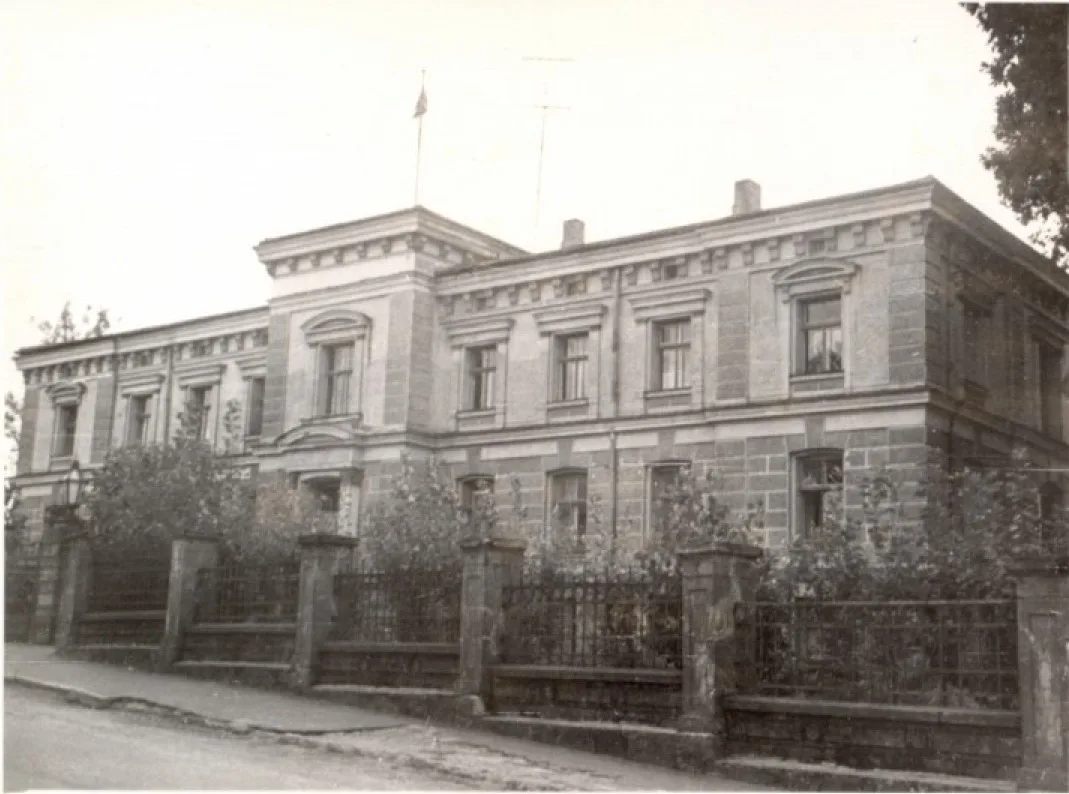
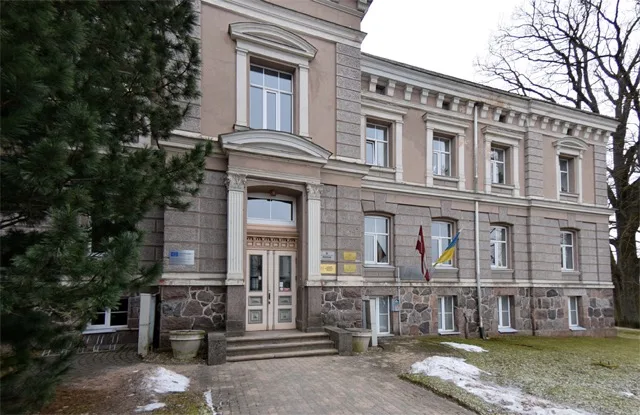
At 5 Bērzaine Street (formerly known as Great Garden Street), stands an impressive building with a rich history – Reyer's Shelter or Reierštifts (Reyhers-Stift). This structure represents a significant example of charitable history in Cēsis, which began with one man who never forgot his hometown.
The building's story began in the late 19th century when contractor Musse started its construction. The year 1899 became the shelter's official birth year when the new building was opened in August. It was named after its founder, Gustav Adolf Reyer, who, being a successful bookseller and publisher in Jelgava, never forgot his roots in Cēsis.
In 1863, Gustav Reyer and his wife Frederike Elisabeth drafted a testament expressing their wish to use their capital (around 100,000 rubles) for charity. They wanted it to grow to 150,000 rubles and be divided between their hometowns – Jelgava and Cēsis. Cēsis received one-third – 50,000 rubles.
As a result of the Reyers' generosity, this elegant shelter was established to serve as a refuge for older Evangelical Lutheran and Reformed confession women – widows of merchants and craftsmen and unmarried daughters who had reached the age of 50. Unlike other similar institutions, Reyer's Shelter was truly luxurious – each lady had a separate room with elegant furnishings, a common hall with a piano, and a "considerable library." It's no wonder that in 1919, the newspaper "Sociāldemokrāts" pointed out the stark differences between this German shelter and Latvian almshouses!
The spacious premises of the shelter had room for only 10 ladies, which testifies to its level of comfort. Some of these respectable residents even offered language lessons or sold their furniture, as evidenced by advertisements in newspapers in the 1920s-30s.
Over time, the number of German residents in Cēsis decreased, and rooms gradually became vacant, which from 1927 began to be used by the Cēsis Health Fund. The fate of the shelter changed dramatically in 1939 when, according to the interstate agreement on the relocation of Latvian citizens of German nationality to Germany, many residents left. The Minister of Public Affairs issued an order to close Reyer's charitable institution in both Jelgava and Cēsis.
After the shelter's closure, the building underwent various transformations – in 1941, the Cēsis City Ambulance was established there, in 1942, a central tuberculosis control facility was opened, and in the same year, Elza Berkholce set up an art salon for promoting Latvian art.
These days, this historic building belongs to the city of Cēsis and houses various government and municipal offices - the Cēsu district municipal police, Vidzeme Planning Region, Cēsu Forest District, and others.
Although the surroundings of the building have changed over time – the fence has been torn down, the street widened – you can still see the original layout in the 1st floor rooms with their separate chambers and the large hall, which once served as an elegant shelter for elderly German ladies.
Source:
Dace Cepurīte, Mg. hist., Research “The Cēsnieks and His House”
Līga Lansberga, Project “Latvian manor houses and castles and other interesting places”