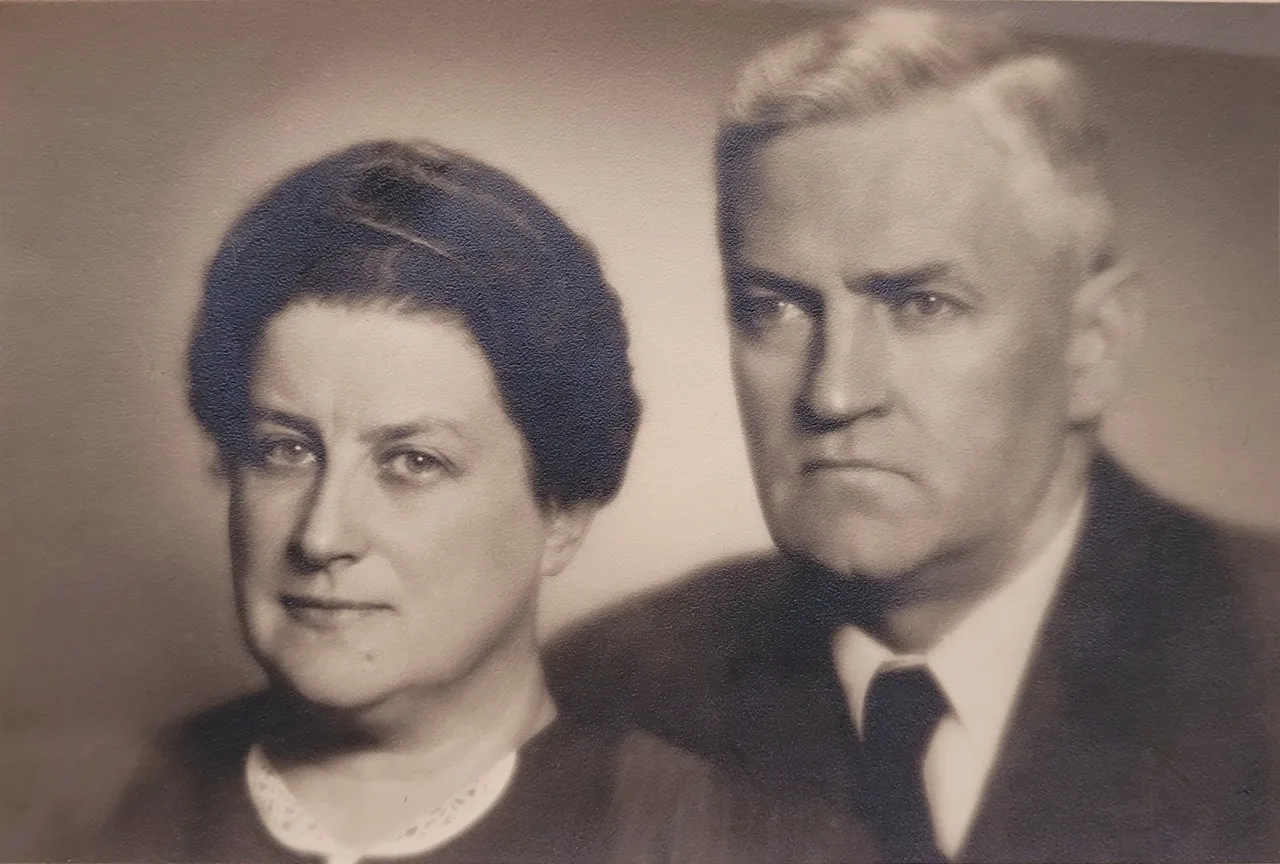
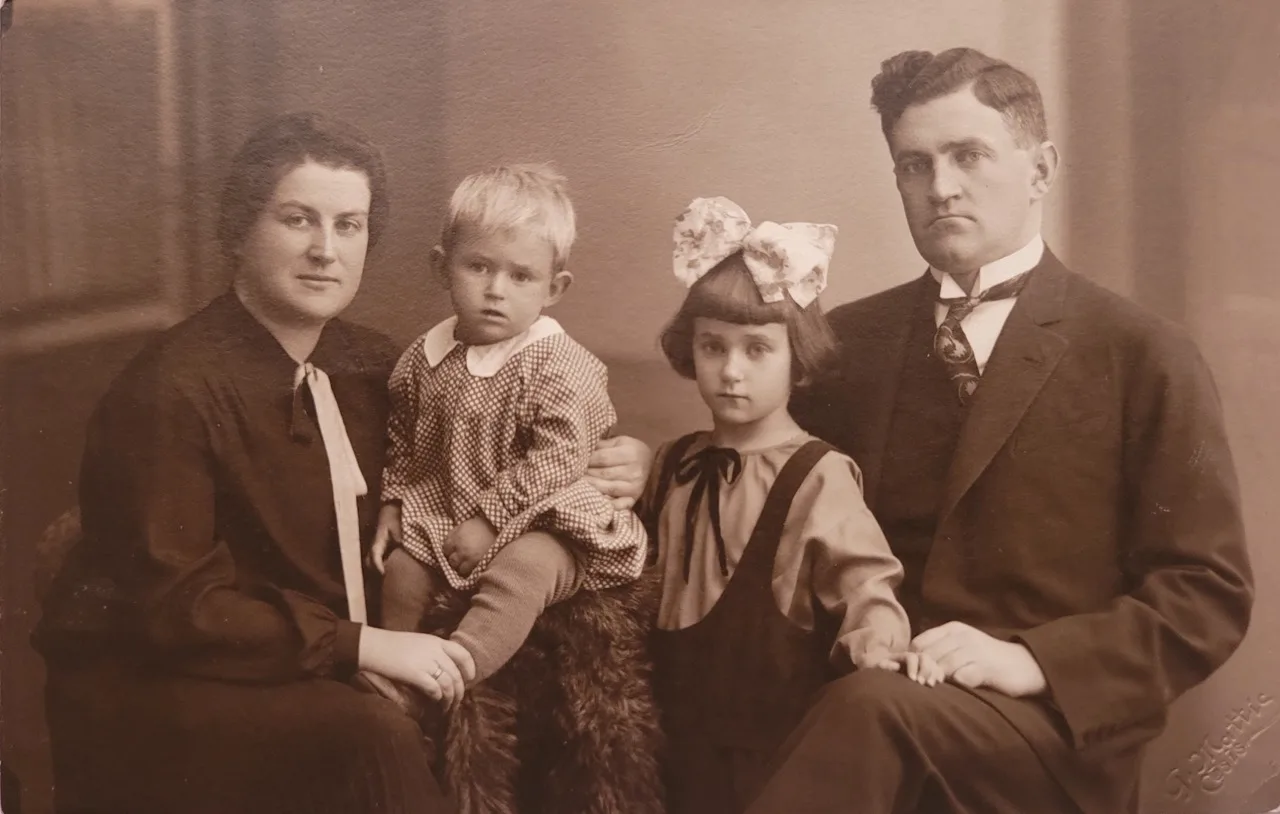
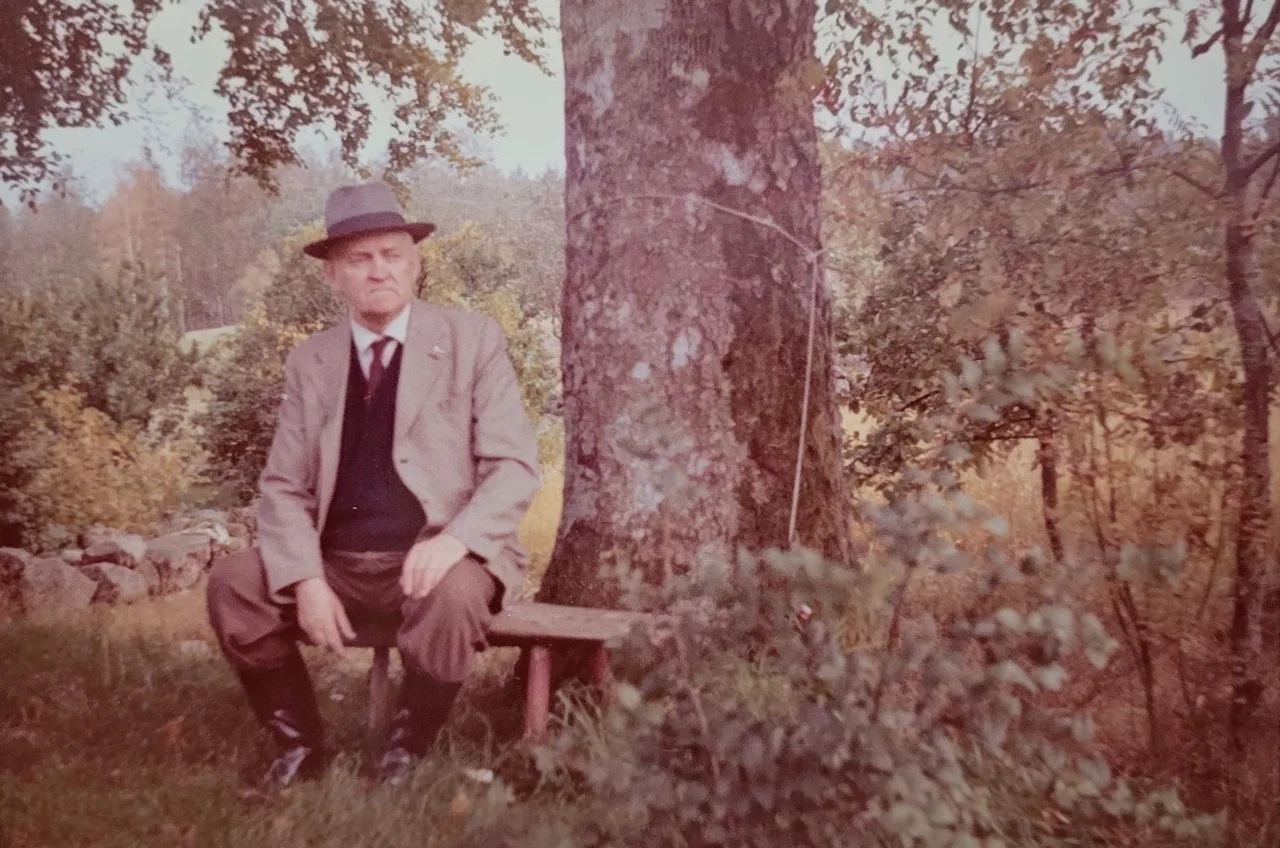
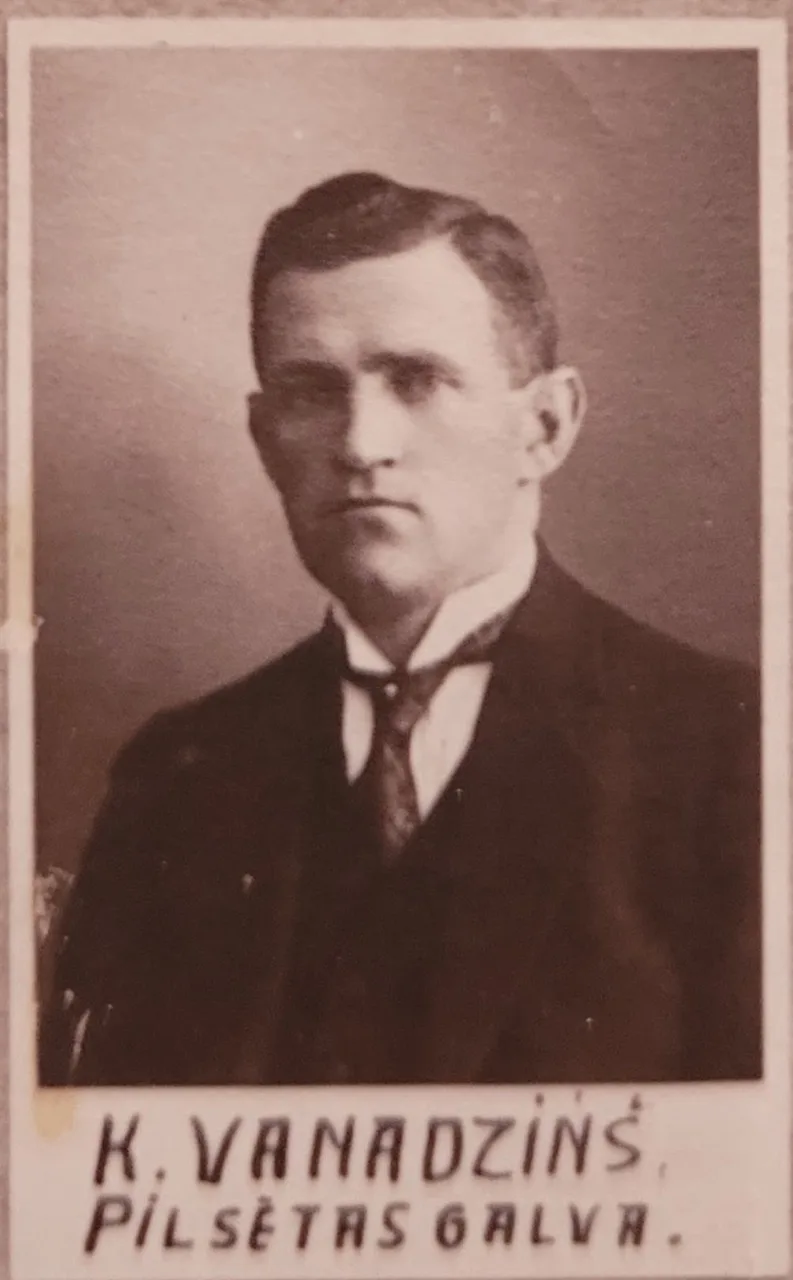
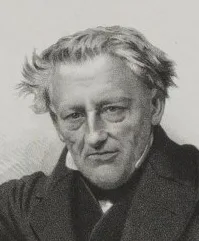
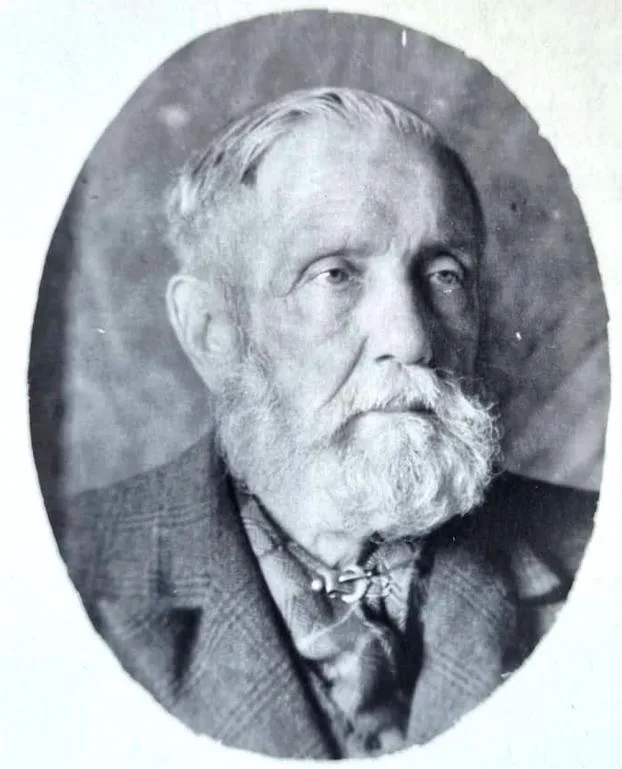
Kārlis Gerhards Vanadziņš (17 May 1890 - 9 July 1965) was a prominent head of the town of Cesis, a physician and a public figure whose contribution has left an indelible imprint on the history of the town.
He was born in Ūdriņi, Trikata parish, into a family of five children. His father worked as a forester. After graduating from St. Nicholas Gymnasium in Riga, Kārlis continued his education at the University of Tērbata from 1912.
Before arriving in Cesis, Vanadziņš practised in Straupe (1915-1916) and continued his medical studies at the University of Tērbata, which he completed in September 1917. 1916. In 1910 he settled in Cesis, but was soon conscripted into the army as a junior doctor in the 1st Latvian Rifle Regiment of Daugavgriva. In March 1917, for his bravery in the battles of December 1916 and January 1917, Vanadziņš was awarded the St. He was decorated with the Order of St Stanislaus, third class, with spears and ribbon.
After his discharge from the army in January 1918, he became the parish doctor of Rāmuļi, continuing to live in Cēsis. In the same year he married Ilze Celmins, a doctor, with whom he started a family and professional collaboration. 1919. On 1 January 2004, he was appointed District Physician of Cesis, which further strengthened his ties with the town.
During the Latvian War of Independence - in June 1919 - Vanadziņš again joined the army, this time in the North Latvian Brigade, serving in the infirmary of the 2nd Vidzeme Infantry Division and later in the Daugavpils Infantry Regiment as a senior doctor. He finished his military career in October 1920, concentrating on his work in Cesis. 1922. In 1926 and 1926 children were born in the Vanadziņa family - daughter Daina and son Visvaldis.
Vanadzinis' greatest contribution can be attributed to his work in Cesis, where in 1922 he became the town mayor. He was characterised by the fact that, while holding the highest office in the town, he continued to practise as a doctor, demonstrating his relentless vocation to help his fellow human beings. 1923. In 1910 he bought a house at 15 Rīgas iela from the heirs of Gregor von Brucker for 5000 lats, borrowing 4000 lats from the Latvian Mortgage Bank for 12 years. Interestingly, he managed to repay the loan in full by February 1930. In this house he set up a private practice, as well as an X-ray and physiotherapy office in the town of Cesis.
In 1924, under the leadership of Vanadzinis, the Cēsis Victory Monument was built, the foundation stone laying ceremony of which was attended by the President of Latvia Jānis Čakste, the Prime Minister Voldemārs Zamuels and the Commander of the Army General Pēteris Radziņš. 1925. In 2005, Vanadziņš tried to enter big politics by running in the 2nd Saeima elections on the list of the Latvian Farmers' Union, which also included Kārlis Ulmanis, but was not elected.
A progressive man, Vanadziņš was one of the few Cēsis residents to own a Ford Model T in the 1920s - at a time when there were only four cars in Cēsis. His foresight was also evident in his courage to take unpopular but important decisions for the town, such as moving the market from the historic Rose Square to a new location outside the town centre.
In 1932, Vanadziņš founded the Cēsis Resort Committee, which promoted the development of tourism and the improvement of the town's sports infrastructure. Thanks to this initiative, a ski jump was built in Cīrulīši and on 5 February 1933 the first ski jumping competition was held. 1933. In 2005, he was also one of the founders of the society “Gauja”, which published the newspaper “Cēsu Vēstis”.
Vanadziņš' patriotism was also manifested in a broader context - in 1929, together with Alfreds Līvens, the head of Cēsis County, he proposed to erect the Freedom Monument in Raunas, donating 1200 lats for this purpose. Thanks to this initiative, the Raunas "Koklētājs" monument was unveiled in 1933.
In January 1939, Vanadziņš was appointed director of the Riga 1st Hospital, but in September 1940 he returned to Cēsis. Unfortunately, political changes soon followed: his house was nationalised and he was arrested during Midsummer 1941. During the German occupation in May 1943, Vanadziņš had his property rights restored, but on 5 October 1944, as the Soviet army approached Cēsis, he and his family went into exile - first to Germany and later to Sweden, where he worked as a doctor in Växjö and built up a collection of Latvian books.
Kārlis Vanadziņš died on 9 July 1965 in a hospital in Lund, Sweden, but his legacy was preserved in Cesis. The “Vanadziņš House” at 15 Rīgas Street was still known by that name long after his departure. After the war, the building housed the Cēsis Health Protection Department and the dispensary was reopened. When the Latvian state was restored, the building fell into the hands of very mismanaged people, as a result of which it turned into a slum that had to be demolished. Only the paintwork and the stairs on the side of Riga Street remained. By 2016, three entrepreneurs decided to renovate the building into a restaurant and hotel - but that's another story.
The materials used for the description are from:
Collections of Cesis Museum and Cesis Central Library.
https://biblioteka.cesis.lv/
Dace Cepurīte, Mg. hist., research “Cēsnieks un jego nams”
http://trikatasvesture.beverina.lv/
Druva Nr.118, 01.08.2001., Pablaka, Laura “Coming to Cesis, I don't cry”
Druva Nr.144, 17.09.2011., Baķe, Māra A look at the history of elections in Cesis
Druva 08.1994., Private cars in Cesis
https://timenote.info