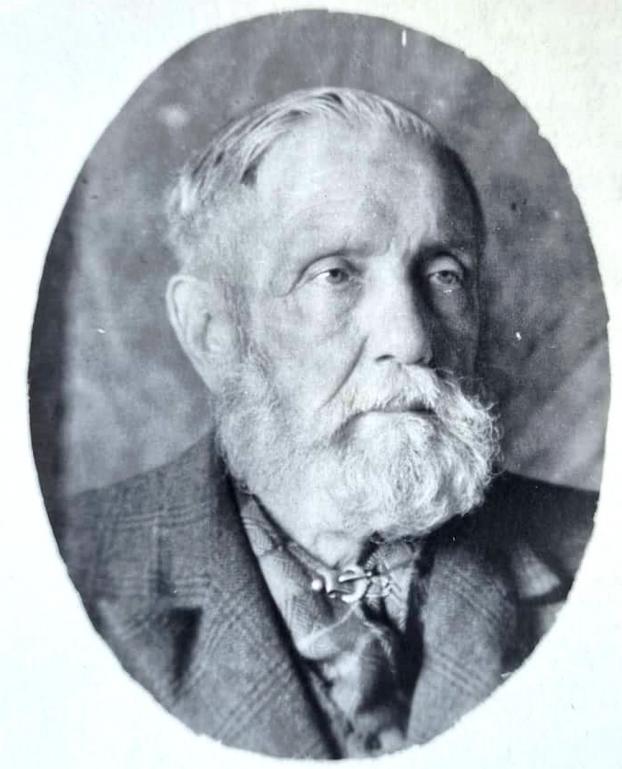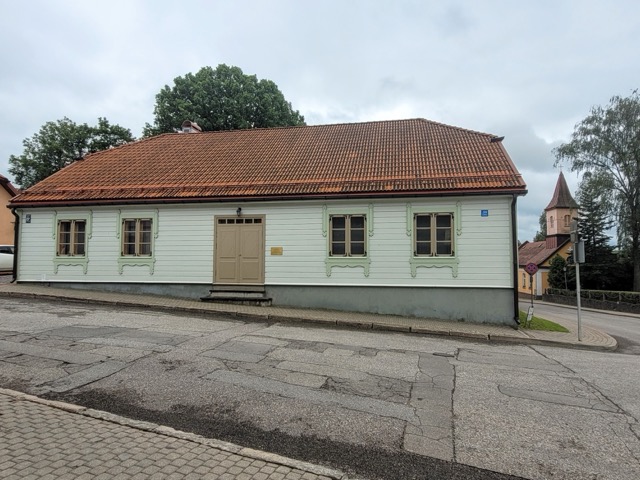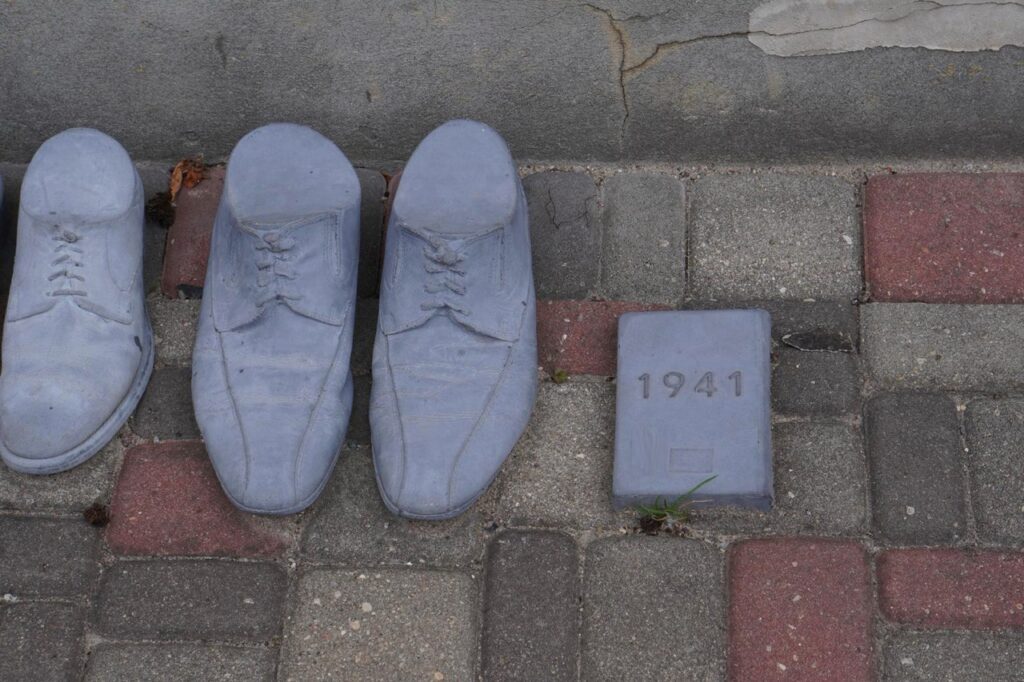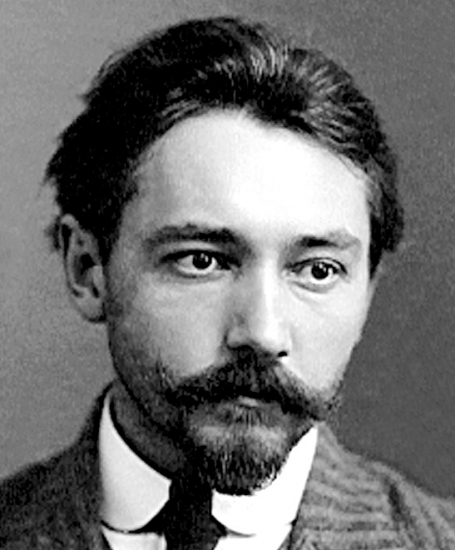


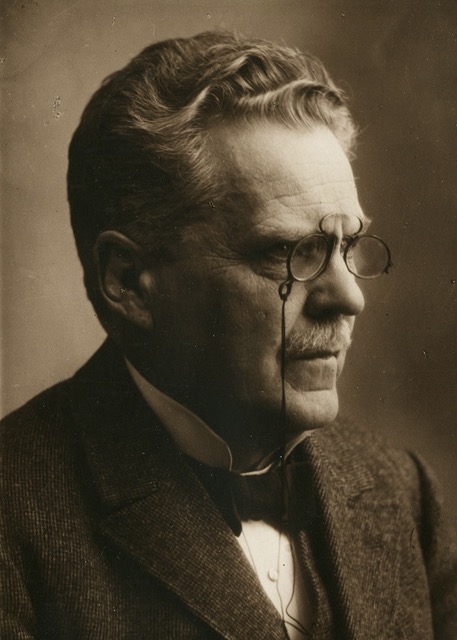


Ernsts Ķivulis was born in Riga in 1862, into the family of Martin Ķivulis, an assistant judge. Showing determination from a young age, he completed Riga Gymnasium and went on to study medicine at the University of Tartu. 1888. In 1888, he defended his doctoral dissertation in pharmacology, demonstrating his scientific interest and potential. After his studies, Ķivulis worked as an assistant physician in the surgical department of Riga City Hospital, gaining valuable practical experience under the guidance of doctors von Bergman and Janson.
Immediately after taking office, Ķivulis continued to advance his knowledge – in 1892, he traveled to Berlin and Vienna to further his medical education, always striving to stay informed about the latest achievements.
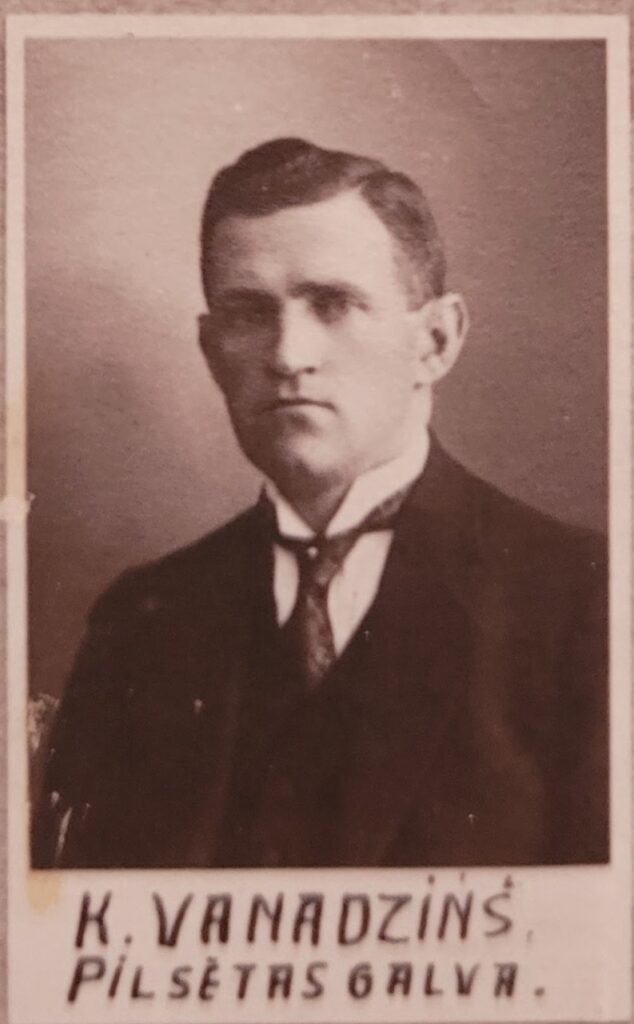
Ķivulis took charge of Cēsis Hospital – a newly built facility, consecrated just four years prior. Under his leadership, the hospital underwent significant changes: in 1926, the building was reconstructed, central water heating, baths, and sewerage were installed, and X-ray and physiotherapy rooms were established. The number of beds increased from 25 to 60, and the hospital began serving not only city residents but also those from surrounding parishes. 1927. In 1927 alone, 691 patients were treated at the hospital, and three other doctors worked alongside Ķivulis – surgeon Anšmits, laboratory manager Goldrings, and X-ray department head Vanadziņš.
Ķivulis’s activities extended beyond his duties as a city physician. 1896. In 1896, he assumed the duties of chief physician at the newly established leprosarium near Cēsis, which served all of Northern Vidzeme. After 10 years of work, he prepared a report on the institution’s operations, which was published in a medical journal in St. Petersburg.
Alongside medicine, Ķivulis increasingly devoted himself to local history research. 1905. In 1905, he became a member of the Riga Society for History and Antiquity Research, and later, a member of the Imperial Russian Archaeological Society. 1909. In 1909, upon the establishment of the local history research department of the German Society’s Cēsis group in Vidzeme, he took on the duties of museum curator.
One of his most significant contributions to historical research was the archaeological excavations in 1910 near the Cēsis railway station, where a Vendian burial ground was discovered. Ķivulis ensured that the unearthed artifacts – necklaces, rings, a knife sheath, and other objects – remained in Cēsis, and they are still on display today at the Cēsis History and Art Museum.
During the war, from 1914–1915, Ķivulis headed the Vidzeme nobility’s field hospital. In the years of Latvian independence, despite the abolition of the city physician’s post, he continued to work as the superintendent of Cēsis Hospital, initiating extensive modernization.
Towards the end of his life, Ķivulis also dedicated himself to modeling Cēsis medieval castle – he created a detailed cork model, whose image and accompanying article “Cēsu pils 17. gadsimtā” (Cēsis Castle in the 17th Century) were published in the magazine “Nedēļa” in 1924.
Ernsts Ķivulis passed away on August 18, 1928, after a stroke during a doctor’s visit in Priekuļi. A large number of Cēsis residents accompanied him from St. John’s Church to the German parish cemetery, paying tribute to the physician who had dedicated more than three decades to the city.
Materials used in the description’s creation are from:
University of Latvia Papers, 704, 2007 (D. Cepurīte “Ernsts Ķivulis – Cēsu ārsts un novadpētnieks”)
D. Vasmanis’s article “How Dr. Ernsts Ķivulis Became the Cēsis City Physician” from the newspaper “Novadnieks,” May 23, 2006.