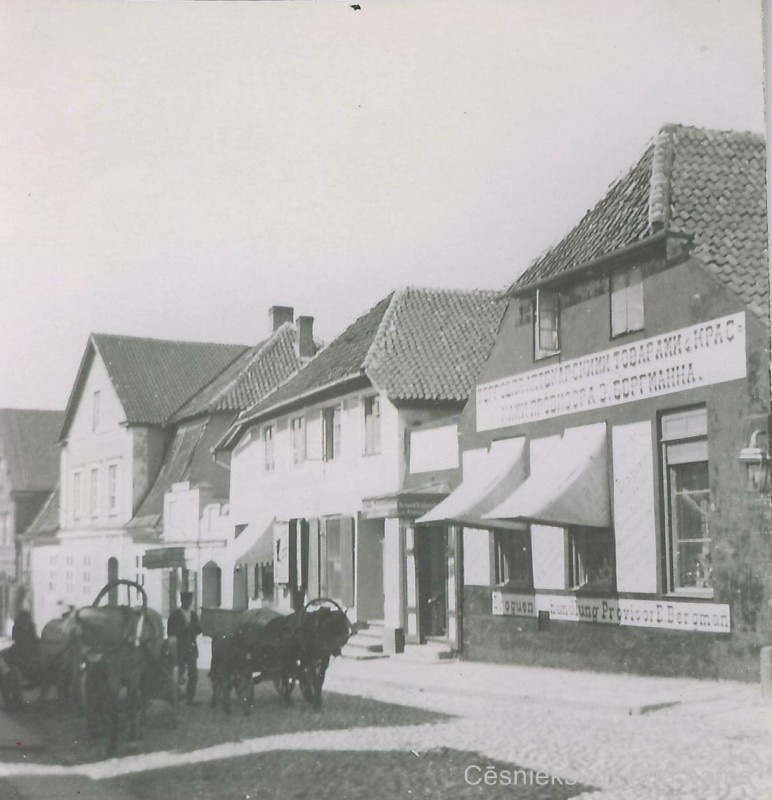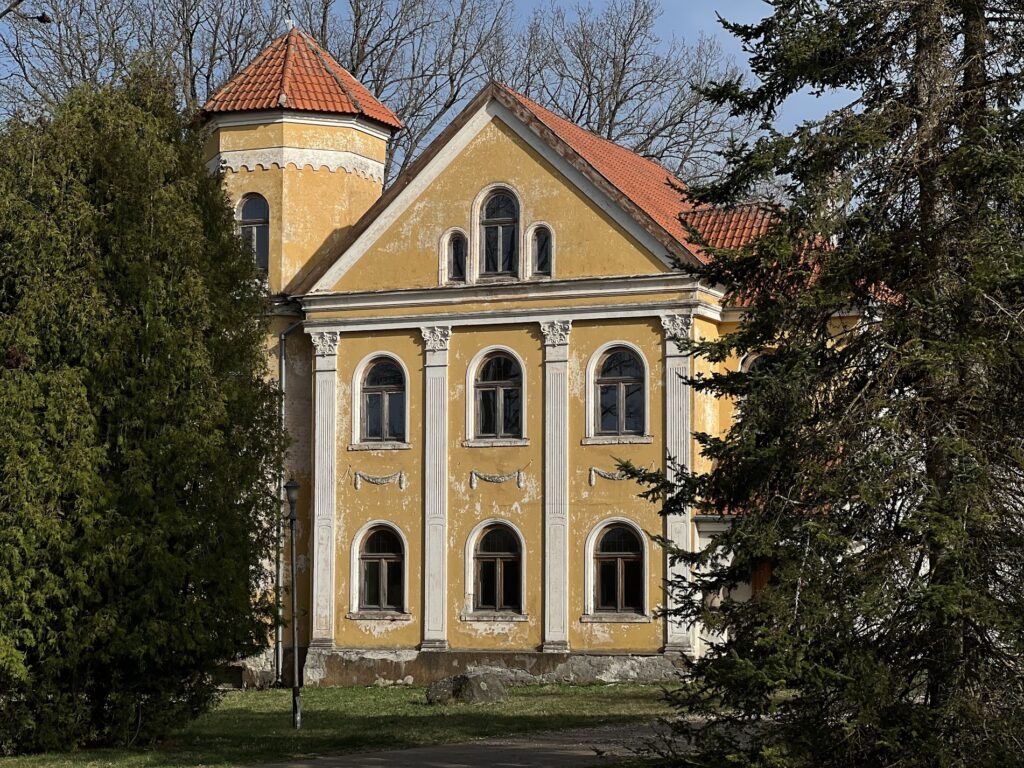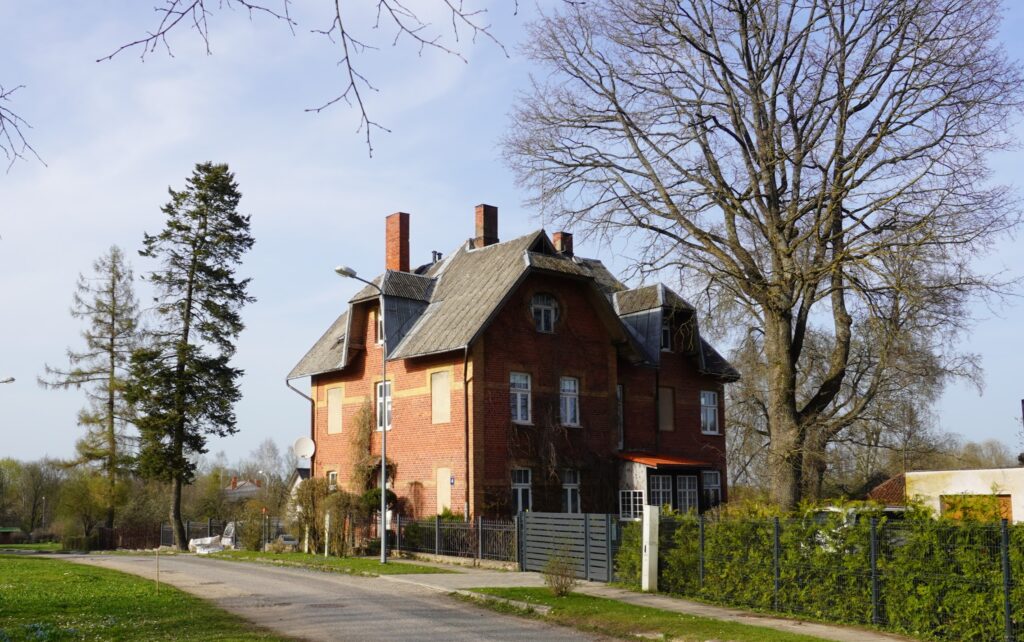



Many historical gems are hidden around Cēsis, and one of them is Blusu Manorette (Blussenhof), quietly preserving its story. Like many other properties, the name likely comes from an early owner. Historians mention David Bluse, found in Cēsis citizen lists until 1773, though direct evidence of this link hasn’t been found yet.
The manorette’s story began at least in the late 17th century, as evidenced by surveyor Johann Heinrich Kelch’s 1688 map of Cēsis citizens’ land plots. Blusu Manorette is already featured with a beautiful residential building and nearby farmsteads. The estate was quite small for its time—only 5/20 arkls (other sources say 34 5/8 mucas). Although these units are contradictory, the area was likely around 17–18 hectares. This is why it was called a “manorette” rather than just a “manor”—small, yet beautiful!
In the mid-18th century, there were two farmsteads on the manor grounds. One was managed by Indriķis Raumzemnieks and his family, the other by Jānis Krauklis. In 19th-century manor audits, these are named Raunzemnieki and Kārklīts.
One of the most prominent figures associated with the manorette was Benjamin Furchtegott Balthasar von Bergmann (1772–1856)—a Baltic German Lutheran pastor, ethnographer, historian, and linguist. He purchased the manorette on July 5, 1813, for 1,600 rubles. Interestingly, Bergmann was the grandfather of the world-famous physician and scientist Ernst Gustav Benjamin von Bergmann.
Benjamin von Bergmann was a remarkable figure—he studied at the universities of Leipzig and Jena, worked as a private tutor in Moscow, and researched the Kalmyk language and customs in Kalmykia. He dedicated his life to serving the Rūjiena and Ērgļi congregations. In his later years, Benjamin settled at Blusu Manorette, where he continued his linguistic work until his death on August 28, 1856.
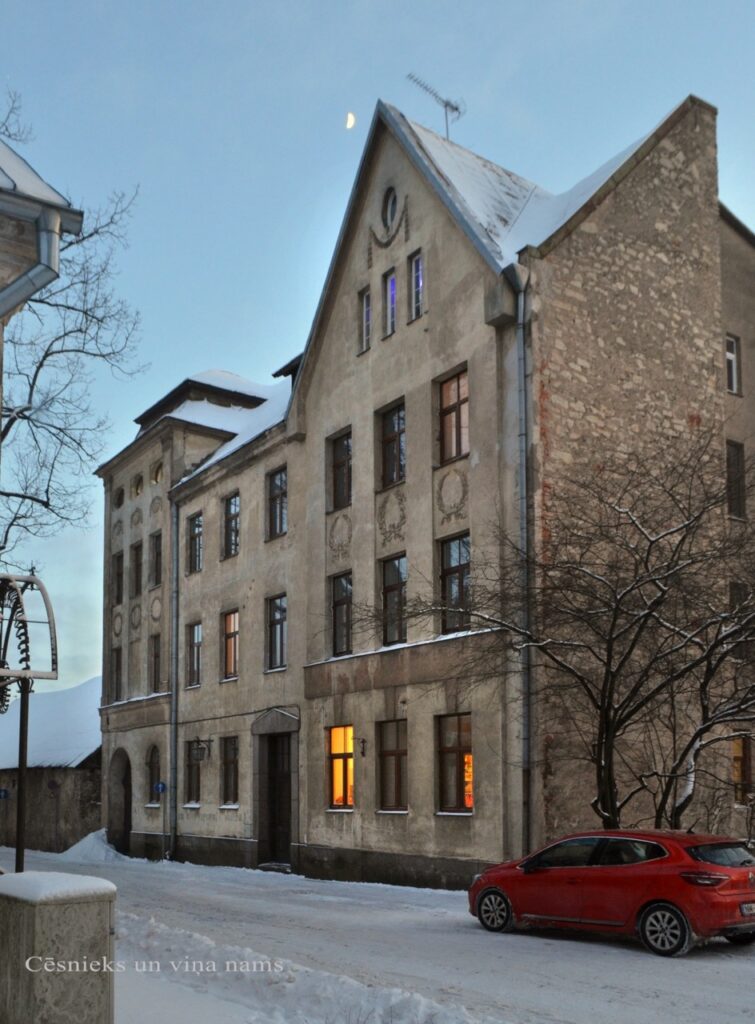
Soviet rule brought changes to the manorette’s fate. After WWII, Delle’s daughters were evicted and forced to live in the former manor sauna—a small refuge with a grand history. In 1954, a new building was erected on the old foundations to house the Cēsis inter-district incubation station. Today, the building contains apartments and is located at 25 L. Paegles Street.
The materials used for the description are:
Ilma Zālīte, Mg. hist. and the Cēsis Rotary Club project “A Walk Around Cēsis Manors”