


Bērzaine — a place where history and education intertwine among the birch groves.
The small Bērzaine Manor (German: Birkenruh) got its poetic name from the birch groves that once surrounded it. This scenically beautiful area on the edge of town has had many different fates throughout history — from a manor estate to one of the most highly regarded schools in the Russian Empire.
Before it became an education centre, the Bērzaine lands were rented at the turn of the 18th and 19th century by Gustavs Stegemans, who paid the city 39.5 roubles a year. Later, in 1823, the land was bought by Pēteris Palms for 2,000 roubles. The oldest building in the complex dates back to 1813 and stood about 100 metres from the current main building.
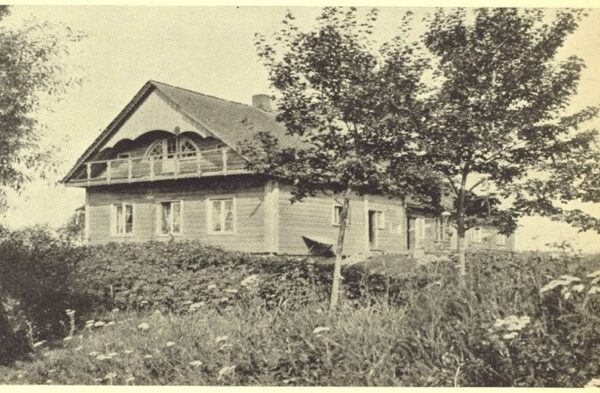
The turning point came in 1826, when the manor was purchased by the remarkable educator Alberts Voldemārs Holanders, who moved his private boys’ gymnasium here. Holanders was no ordinary teacher — he was a pupil of the famous Swiss educator Johann Heinrich Pestalozzi, and under his leadership Bērzaine Manor began a new life as an education centre. Around the same time, a new residential building was constructed for the manor’s owners — a partly wooden, partly stone structure with a storey, a pyramidal roof, and a mansard. Sadly, this building did not survive, as it was destroyed in World War I. Today all that remains of it are levelled foundations and a small round pond nearby.
Under Holanders’ leadership, over 36 years the manor became one of the most highly regarded schools in the entire Russian Empire. Students came not only from Vidzeme nobility families, but also from noble and even lower-class families from across the province. After Holanders, the school was run by Martins Loflers from 1861 to 1869, and then by his son Alberts Loflers from 1869 to 1882.
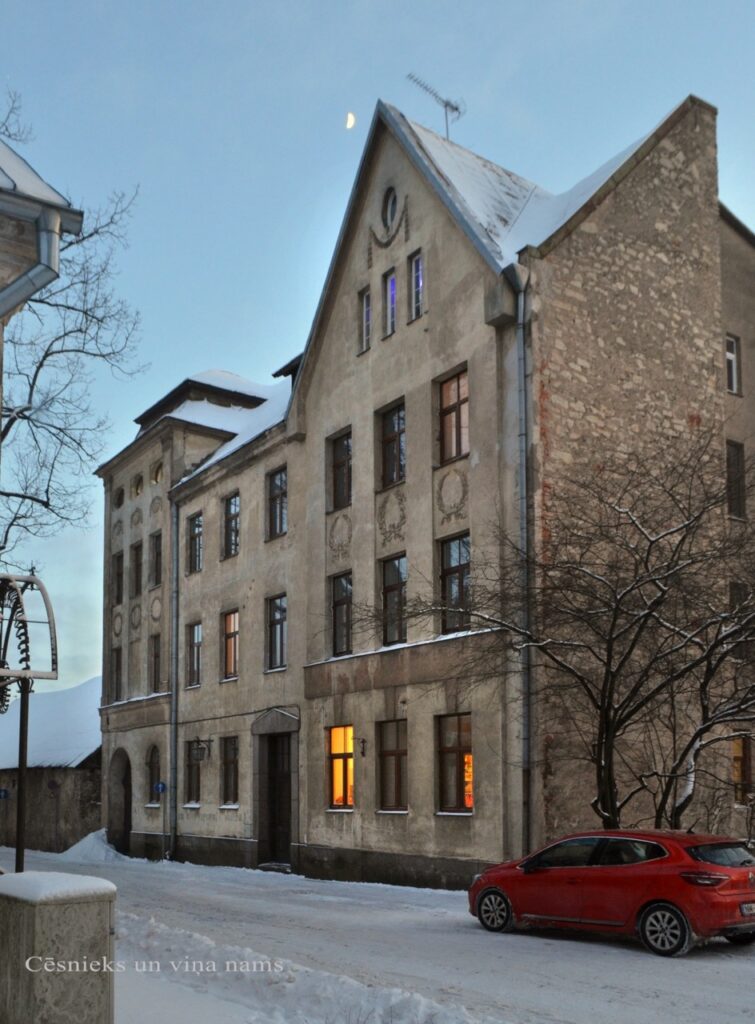
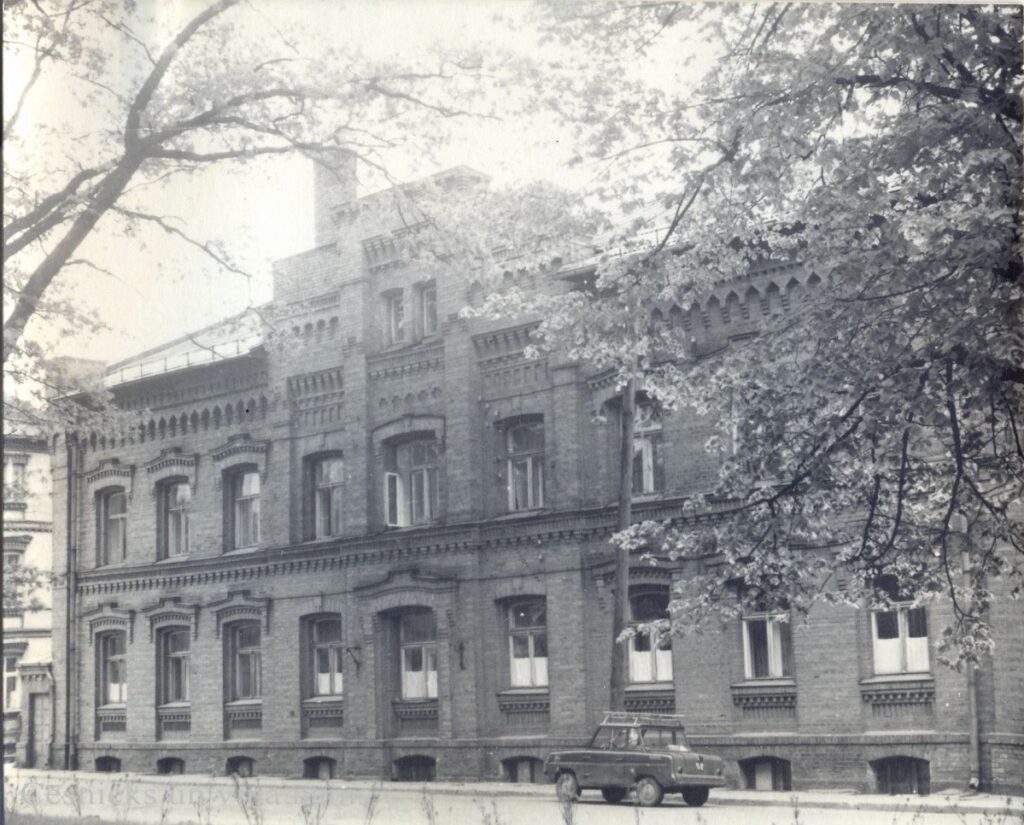
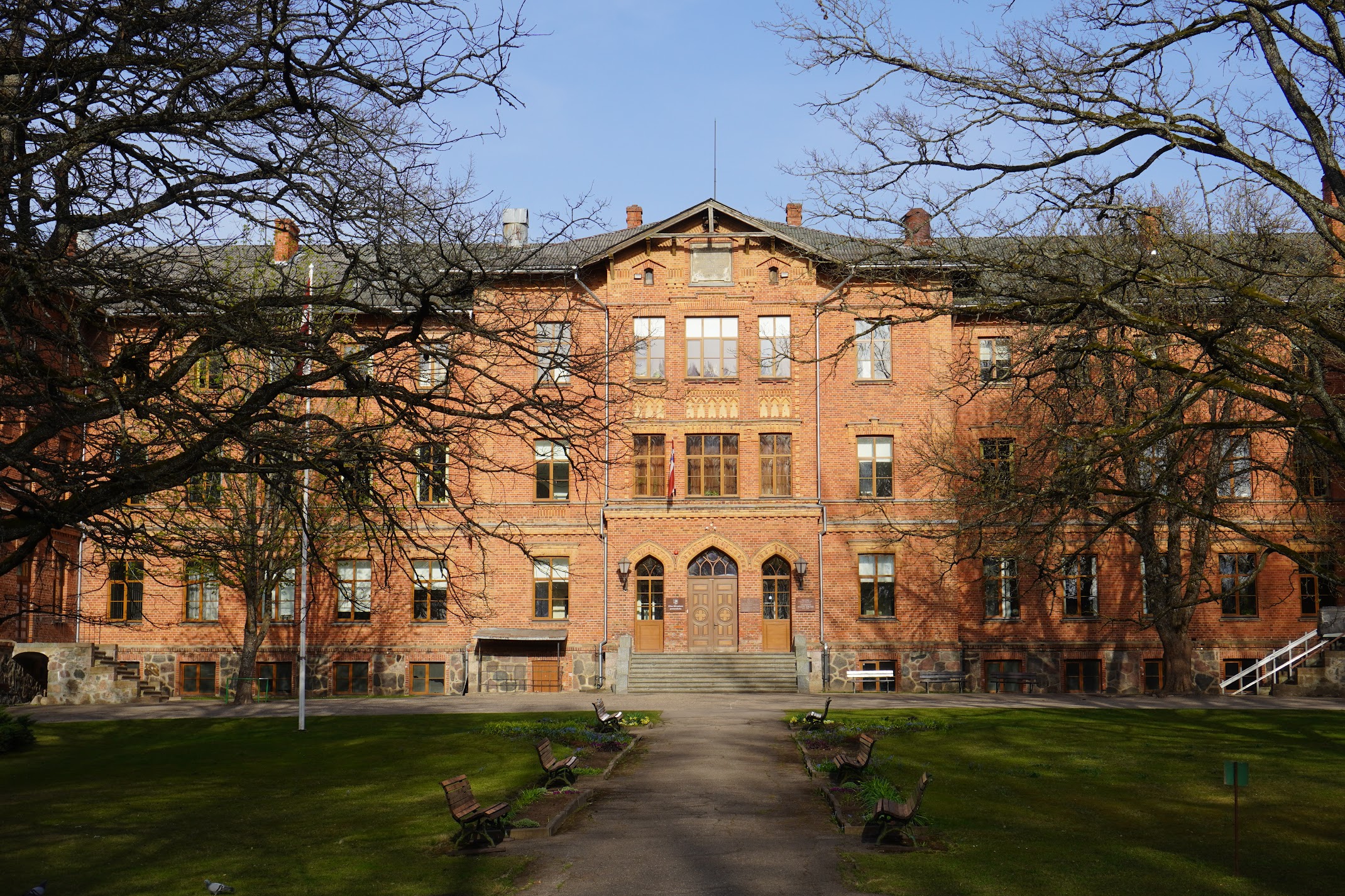
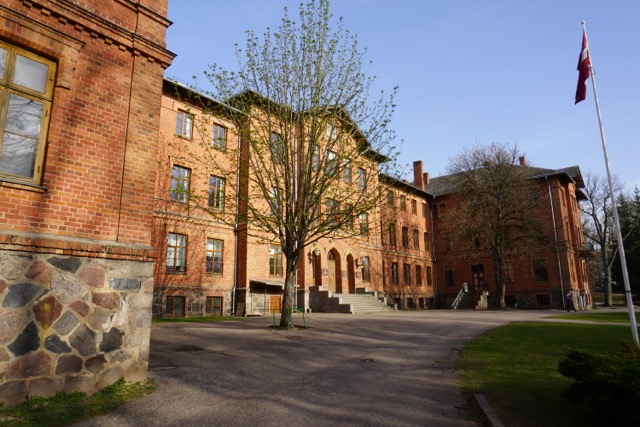
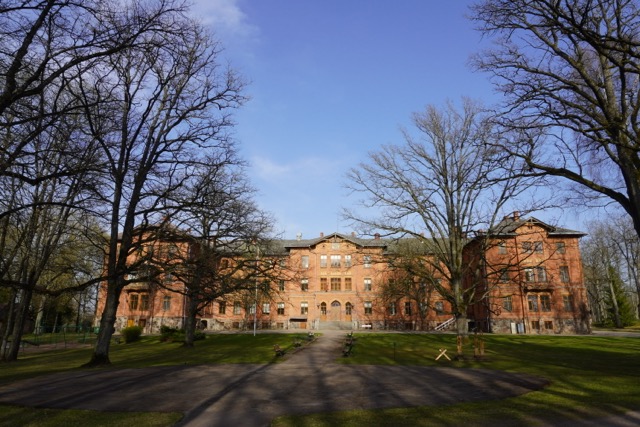
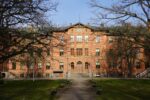
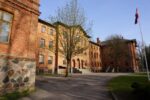
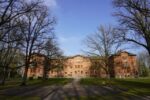
Bērzaine’s real golden age began in 1880, when the Vidzeme nobility decided to purchase the property and establish a nobility gymnasium there. The current impressive red brick building, now known as Bērzaine Gymnasium, was built in 1882 to a design by architect and civil engineer Otto Reinhold August von Sivers, who oversaw the construction himself, with architect Jānis Kampe handling day-to-day supervision. Since state funds were used for construction, the school was named after Russian Emperor Alexander II. This three-storey building, built in the Neo-Gothic style, is today a state-protected historical monument.
Lessons at Bērzaine Manor were conducted in German, and it was a classical gymnasium with 8 forms. Students were admitted by entrance examination. Tuition was not cheap — school fees were 100 roubles a year, with board costing 300 roubles for students from Vidzeme and as much as 330 roubles for others. This meant that parents needed to be fairly well-off. Boarding students had to bring a whole list of items with them, including pillows, a blanket, several shirts, underpants, socks, shoes, and even a dressing gown or coat.
Following the Russian government’s 1887 decision requiring a switch to Russian-language instruction, the Vidzeme nobility resisted, and as a result the school was closed in 1892. Later, after the suppression of the 1905 revolution, the gymnasium reopened in 1906 with a compromise — lessons were held in both German and Russian, but exams had to be taken in Russian. These language difficulties reflected the wider tension between the local German nobility and the Russian Empire’s drive towards centralisation.
The outbuildings, constructed from the same red brick, added to the complex’s sense of unity and created a coherent architectural ensemble. The building’s architectural significance is also reflected in its decoration — the facade gable once proudly displayed the Vidzeme coat of arms, a griffin with a sword, whose place now stands empty and would be worth restoring.
The materials used for the description are:
Ilma Zālīte, Mg. hist., and the Cēsis Rotary Club project “A Walk Around the Manors of Cēsis”;
the collections of Cēsis Castle Museum and Cēsis Central Library.